Interview · September 2021
Meet Alex, our EiR
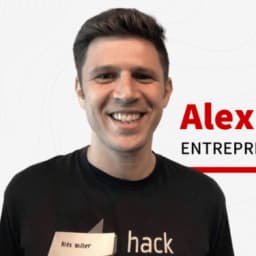
Alex Miller · Entrepreneur in Residence, Accelerating Asia Cohort 5
Get to know Alex Miller, our Entrepreneur in Residence. Originally from New York City, Alex got his start in NYC's Silicon Alley in 1999, before moving to Asia to work for renren.com, GetCraft.com and creadits.com. He's worked as an Entrepreneur in Residence at 500 Startups in San Francisco and joins us as our Entrepreneur in Residence for Cohort 5.
Where is your hometown / where are you based?
- Grew up in New York City
- 10 years in Beijing
- 3 years in San Francisco
- 3 years in Singapore
- Currently based in Bali, Indonesia
I love to travel over land. I took a bus from Delhi to Kathmandu in 1999, traveled across Sumatra with only a paper map in 2002, rode a motorcycle from Beijing to Qinghai in 2007, and have done numerous road/train/boat trips across the Americas and Asia. Now it's about time for my next one… maybe after the cohort?
What is one thing that people might be surprised to learn about you?
In 2001 I was studying Chinese and decided to take a train across China for the winter. I found that living in the countryside was a much more effective way to learn a language — and learning a language was a great way to make friends.
My mother was an entrepreneur, so I blame her for my startup addiction. My father loved to travel, so I blame him for my addiction to adventure. The world has changed so much — when I was a boy we had a fax machine before the 2400 baud modem, and now I can ask Siri anything from a boat 10 miles off the coast of a small island in Indonesia.
What are you currently reading, watching, and listening to?
I'm usually reading a few books at a time. Right now I'm in the middle of:
- Winter Pasture: One Woman's Journey with China's Kazakh Herders — Li Juan
- Woman on the Edge of Time — Marge Piercy
- Blockchain Chicken Farm: And Other Stories of Tech in China's Countryside — Xiaowei Wang
Watching: Human Behavioral Biology with Professor Robert Sapolsky (Stanford University). Listening to: Mingyur Rinpoche in conversation with Sam Harris, live at the Wiltern.
How did you get into startups?
I started programming for a small startup in New York's Silicon Alley in 1999. Since then I've worked as a product manager (including at Renren.com, IPO on NYSE) and founded or cofounded several less notable startups, holding CEO, CTO and CMO roles.
I've worked in probably 20 startups and 50 jobs across 4 countries — from snow shoveler at Grand Targhee Ski Resort (which gets 13 meters of fresh powder every season 🌨🏔🏂), to travel writer and photographer all over China, to product manager at a pre-through-post-IPO startup in Beijing, to founder of startups in Tokyo, Beijing, and San Francisco.
I've seen a bunch and had some big ups and some big downs. I haven't been the most successful, but I've enjoyed my career and perhaps gained a little wisdom along the way. Certainly I like to think I've made enough mistakes to at least sometimes know what not to do.
How do you think about building companies?
I tend to zoom out and ask — how did we get here? Where are we going? Is that the right thing to do? Is this going to be big, or just a waste of resources? And also zoom in: out of all the things we could be doing, is this the right task for the moment?
Startups are funny like that. Probably the most important thing I've learned is that you need to prioritize ruthlessly. Cut everything and JUST FOCUS on what matters now.
The problem is it's easy to stay focused on that thing even after it's proved wrong — or it's impossible to stay focused when new things keep popping up. Managing focus and resources is such a huge battle.
That's why I feel so strongly that startups need rituals — daily and weekly — to keep everyone on track. Regularly scheduled planning sessions at the right zoom level. Retrospectives to make sure we learned from our successes as well as our failures. And systems and metrics to track it all.
It's also why I'm convinced startups need diversity at all levels, flat org structures, and healthy supportive environments free of fear and politics. The ideas that feed the decisions which marshal our focus and drive our growth — they can come from anywhere, and anyone in the organization should feel free to share them.
…All that stuff I said about focus? That's hard work, and I have too much ADHD at the moment. I'm coming out of a year of retirement and I'm excited to look around and help where I can.
I love to think and brainstorm with founders, drill into metrics, work on the storytelling of the startup, dig into the details and figure out why this campaign or product launch was a flop (or a win). To work out a headhunting strategy, or sit down and moderate a founder spat. So yeah — I'm in it for the thrill of living vicariously through so many founders. It's gonna be a fun ride.
What else are you working on?
In addition to my role as EiR, I'm currently toying with e-motorcycles in Indonesia, writing a headhunting tool for remote engineers, working with a friend on a Shopify / e-course business, building a house, and raising two small children.
Your advice for founders?
- Put your phone down and go talk to a customer!
- Think deeply and write it down.
- Encourage your team to do the same.
- Don't shy away from disagreements — and don't make them personal.
- Find people you can trust to tell you when they think you're wrong, and why.
Why accelerators, and why Accelerating Asia?
As a startup founder, being connected to a network of founders and investors is invaluable. Accelerators provide that network — but they also provide a sounding board for ideas, a place to hone your craft as a manager, marketer and entrepreneur, and a safe space to share your ups and downs with a cohort going through the same phases of the rollercoaster, alongside people who've been there and done that.
In addition to working with these great startups, I'm excited to work with the phenomenal team of operators that Amra and Craig have put together. And I'm really excited by the diversity of startups in our batch and portfolio — from Australia to India and Bangladesh, Accelerating Asia is investing in the future.